Project partners: Borås Energi och Miljö AB, City of Borås (Environmental Administration), University of Borås/Institution for Educational Work, Navet Science Center (Boråsregionen Sjuhärads kommunalförbund), Science Park Borås
Contribution: SEK 1 000 000
Project duration: 2025-10-01 to 2026-09-30
Contact person: Pernilla Ankarberg, Navet science center
Purpose and objectives
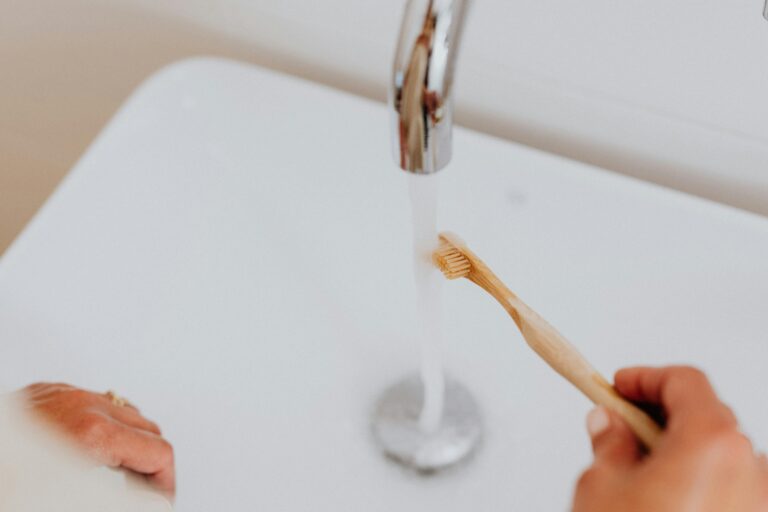
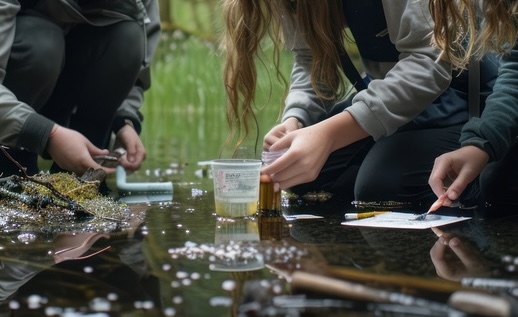
UPPLEV wants to strengthen society’s capacity for sustainable water use and at the same time strengthen the water industry’s capacity to contribute to behavioral change. Through place-based and experience-based co-creation with children and young people, new ways of working are developed that link individuals’ everyday choices to socially critical water infrastructure. 20 young people are engaged as water ambassadors and participate in co-creation with experts, researchers and need owners. They explore everyday environments such as bathrooms, laundries, flood zones and waterworks to identify barriers, drivers and solutions. The focus is on creating methods and tools that strengthen agency, understanding and participation in the water transition.
Expected impacts and results
The project will result in:
– A methodology for place-based learning and behavior change
– Learning prototypes to be integrated into the upcoming Navet water exhibition
– New models of cooperation between VA actors, young people and education actors
– Increased system understanding among both young people and policy makers
The results are expected to eventually reach over 700 000 people, including 200 000 students and 10 000 teachers. The project specifically promotes the Water Wise Societies goals of Wise use of water and Resilient supply, by demonstrating how technology, pedagogy and participation can work together for long-term change.
Planned approach and implementation
The project is being run in collaboration between Navet Science Center, local needs owners, academia and innovation environment. The work is iterative and co-creative in four stages: analysis of target groups, development of methods and prototypes with elements of design thinking and nudging, testing and further development, and implementation via exhibition, school programs and teacher programs. The focus is on creating solutions that are understandable, engaging and useful in multiple contexts.
The text on this page was written by the project team. The content has not been reviewed by our editors.
Goals and tasks
- Resilient supply and management of water in society
- Build and manage society in harmony with the waters
- Thriving and healthy waters
- Reduce negative impact on water ecosystems
- Wise use of water